2008-06-19

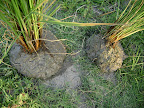
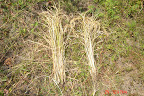
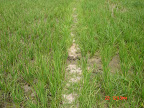
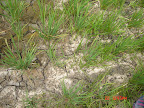
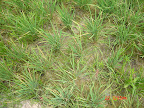
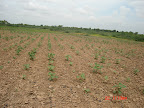
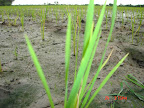
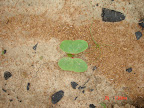
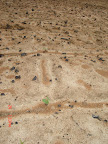
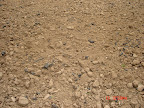
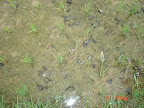
Comparision of the TP paddy and Control Paddy growth


Rabi 2008


Kharif 2007

2007-10-18

Counting Tillers in the Paddy field of Mr. Venkataiaha

2007-10-15

Count of tillers in Paddy

Count of tillers in "Sri" Paddy - Variety Sona Masuri - Farmer P. Narasimha Reddy, Kothur Village, Midjil Mandal, Mahabubnagar District, Andhra Pradesh, India

Samples - Random 10 nos.
Alkaline soil treated with charcoal 43(Avg) 52(Max) 27 (Min)
Control Field 29(Avg) 35(Max) 23 (Min)

For complete data follow this link

2007-10-09

PROGRESS

The farmers are very happy with the results of application and Charcoal and other soils amendments, with guidence they have adopted the treatments for Horticulture pits too.
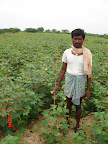
COTTON


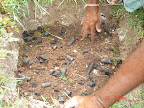
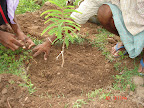
HORTICULTURE PIT TREATMENT


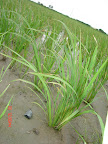
PADDY FIELD

2007-08-26

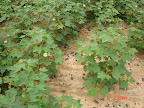
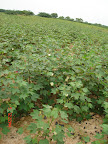
COMPARE CHARCOAL TREATED AND NON-CHARCOAL TREATED FIELDS

RIGHT SIDE PADDY FIELD TREATED WITH CHARCOAL

NON-CHARCOAL TREATED

CHARCOAL TREATED

COTTON FIELD

2007-07-25

PADDY FIELD

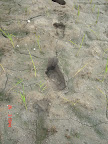
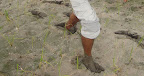
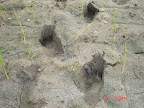
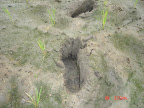
The soil condition in the paddy field has improved very well, while walking in the field bare footed, one could feel the firmness and evenness of the soil. Whereas in untreated field, it is crumpy and slippery.

Pictures from the field

Cotton

2007-07-10

The paddy field is ready with all the treatment processes followed including the application of Charcoal + Micobes + etc.

Additions to soil

Charcoal + vermicompost / farm yard manure + Microbes after culturing for 15 days in a gunny bagGypsum crushed and added to the fields

2007-06-26

Posted by Picasa
The charcoal produced from Prosopis Juliflora in the village is kept ready for spreading it in the alkaline soils after throughly cleaning it in water.
Farm yard manure is being applied to the field
Posted by Picasa
Sand is being spread in the field
Posted by Picasa

Sand and Charcoal is spread in the field and would be ploughed

Sand kept ready for spreading before ploughing
Posted by Picasa
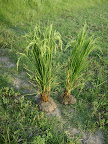
Farm yard manure / vermicompost (25 kgs) + Charcoal cleaned in water (25 kgs)
Posted by Picasa
Vermicompost, being collected
Posted by Picasa

2007-06-25

Posted by Picasa
Fill the mix (Farm yard Manure / Vermi compost + Charcoal + Microbes charge) in gunny bags cover it with straw and sprinkle water everyday for keeping the moisture, this is one method of increasing the population of microbes before introducing into the field.


The Trichoderma Viride, Azospirillum, Azatobactor and Pseudomonas fluorescens are added to Charcoal and Farm yard Manure / vermicompost and made into four heaps before filling.

2007-05-16

Posted by Picasa

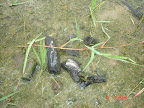
Partial Biochar, char, burnt soil and ash lying in the field
Posted by Picasa


Uprooted root stock in the field removed with the help of machinery
Posted by Picasa
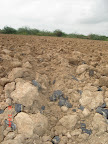
Alkaline soil field of a farmer trying to reclaim after 14 years, recently cleared Prosopis
Posted by Picasa

Alkaline Soil
Posted by Picasa

Alkaline Soils - Terra Preta solution

Regarding application of Terra Preta to the Alkaline soils, yesterday I had been to Kothur Village, a V & A Programme village in Semi-arid environment (for more information see http://e-charcoalmaking.blogspot.com/. ).

I explained the farmers regarding the use and application of Terra Preta for treating the alkaline soils. Before that some char pieces were brought for demonstrating the use and good qualities of char. Using the high resolution imageries of Google the fields with intense alkaline soils were identified. From those selected areas four farmers have come forward to try this method in their half to one acre size fields. Regarding the application, as there is abundant availability of Prosopis in the village, this is an easy method for them. The logistics and the cost of char was discussed, they were able to sell char @Rs. 0.2$ (USD) per kg. For applying about 1500 kgs of Char per acre, it would cost them about Rs. 300$ (USD). Which seems to be on the higher side for the poor farmers, so another alternative was making charcoal from the thin stems of Prosopis a wasted product in the charcoal making process and there was plenty of such dry twigs / stems of Prosopis available. Some farmers in the recent past trying to reclaim their Prosopis lands have used machinery and there are lots of heavy uprooted root stocks, with soil attached. They are burning such root stocks in the respective fields. This kind of burnt material consists of

  1. partial biochar
  2. Char,
  3. well burnt soil and
  4. plenty of ash

The farmers have agreed to put this resultant material in their fields, which is of no cost and available in plenty. I am only hopeful that the above resultant material is acidic and would improve the soil quality. As the farmers have not started the process yet, the timely advice from you all would be helpful.

The soil testing results and the suggested recommendations (draft) are seen in this link:

https://spreadsheets.google.com/ccc?key=o10812964457535742150.9005067587193697975&hl=en&pli=1/

http://spreadsheets.google.com/pub?key=pxqBXdOJdD5a3dhB5Qm34fA/